
AI Health & Biotechnology
ADM2 Linked to Cancer Invasion and Metastasis
Experimental models suggest the peptide hormone helps cancer cells invade blood vessels and spread.
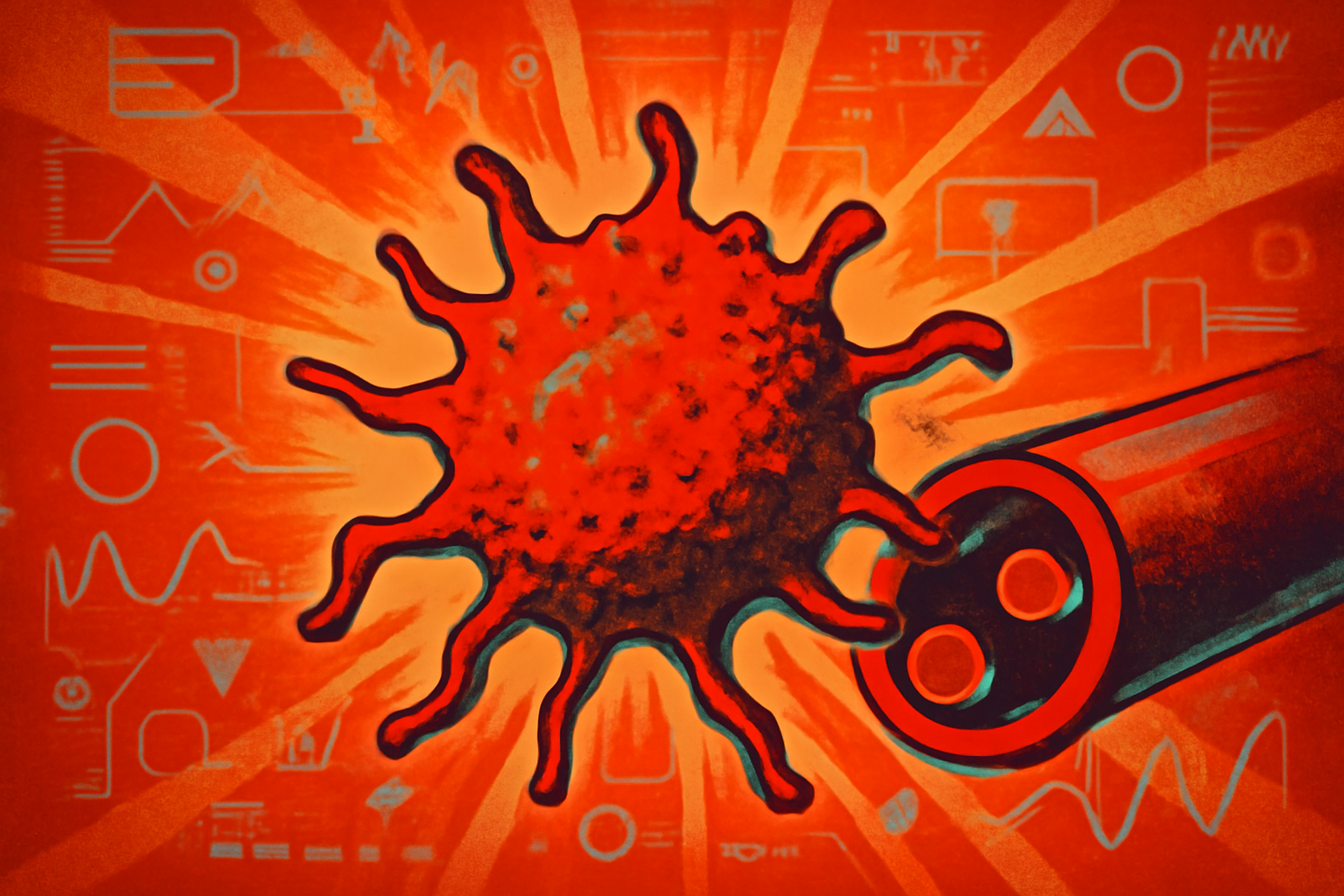
Illustration of tumor cells approaching and entering a blood vessel.
Photo: Kronos News
A study published in Oncogene on October 10, 2026, identifies adrenomedullin 2 (ADM2), a peptide hormone, as a regulator of cancer-cell invasion and metastasis in experimental models. The researchers observed ADM2-producing cancer cells moving toward and entering blood vessels, a process called intravasation. [1]
When researchers reduced ADM2 expression, they observed less invasion and intravasation, as well as fewer or smaller metastatic lesions in chicken-embryo and mouse models; similar effects were reported in tested human cancer cell lines. [1] These results point to ADM2 as a potential research target, not an established treatment: the study does not show that targeting ADM2 is effective or safe in people. [1]
Editorial notes
Transparency note
AI assisted drafting. Human edited and reviewed.
- AI assisted
- Yes
- Human review
- Yes
- Last updated
Risk assessment
The findings are preclinical and rely on experimental models; the article makes no claim of proven human treatment or clinical benefit.
Sources
Related stories
View all


Topics
About the author
Kronos News Desk covers ai health & biotechnology and editorial analysis for Kronos News.