
AI Science & Discovery
AI Decodes Rules of Ancient Roman Board Game
Researchers use AI simulations to solve the mystery of a 2,000-year-old limestone board found in the Netherlands.
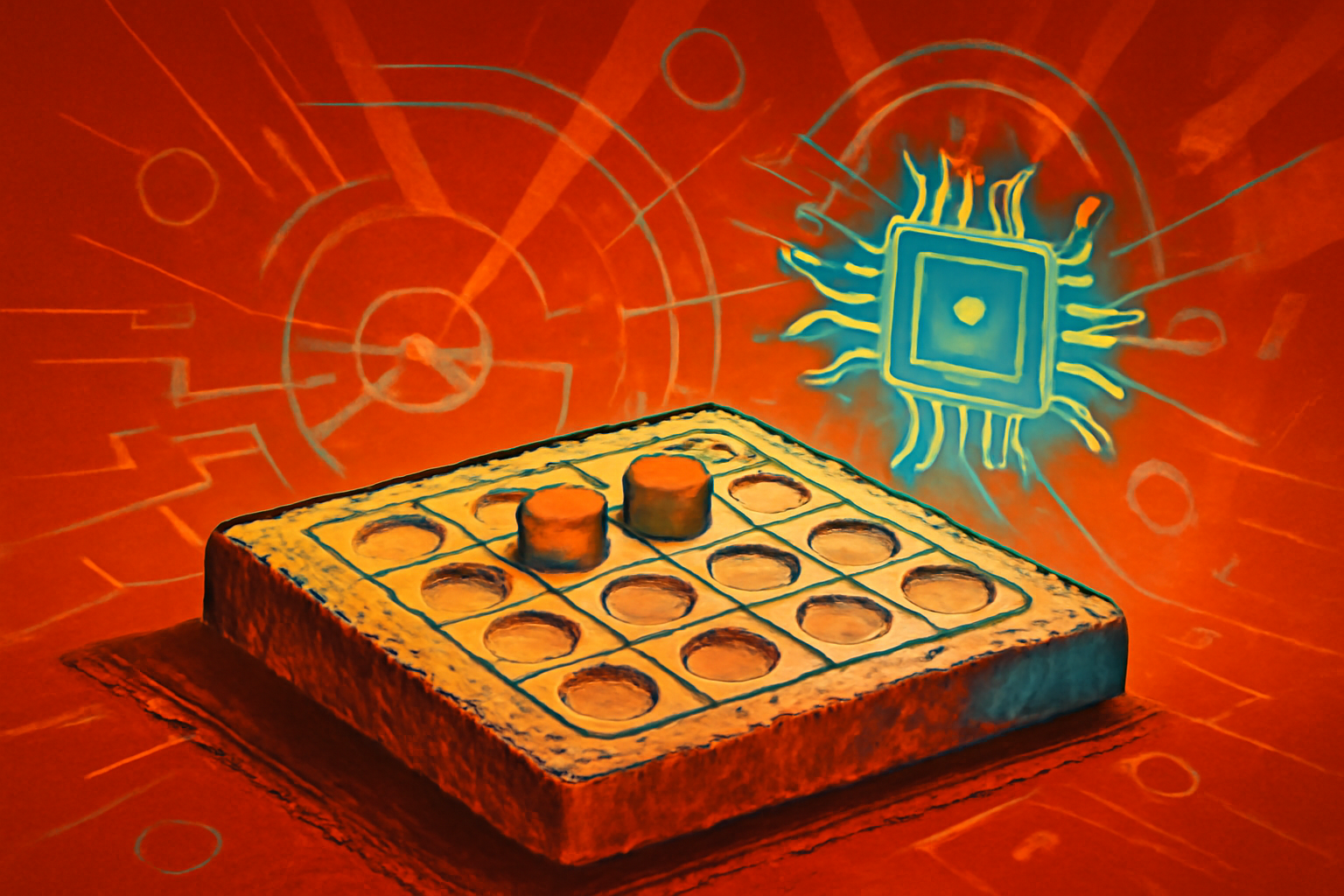
A 2,000-year-old Roman limestone board game with etched geometric patterns sitting on a display surface under museum lighting.
Photo: Kronos News
Researchers used AI to decode the rules of a 2,000-year-old Roman board game found in the Netherlands [1][2]. The artifact, a limestone slab from ancient Coriovallum, had puzzled experts due to its unique engravings [3][4]. Scientists combined microscopic wear analysis with AI gameplay simulations to identify the object as a "blocking game" [2][4]. The study, published in the journal Antiquity, used the Ludii AI system to simulate thousands of matches [1][3]. Simulations matched physical wear on the stone to a strategy game where four pieces play against two [2][4]. Researchers named the game Ludus Coriovalli, pushing the history of blockade games back by several centuries [1][3].
Editorial notes
Transparency note
Drafted with LLM; human-edited
- AI assisted
- Yes
- Human review
- Yes
- Last updated
Risk assessment
Reviewed for sourcing quality and editorial consistency.
Sources
Related stories
View all


Topics
About the author
Kronos News Desk covers ai science & discovery and editorial analysis for Kronos News.