
AI Health & Biotechnology
AI Designs RNA Switches for Cellular Logic
TU Darmstadt researchers use deep learning to create synthetic genetic switches that mimic computer functions.
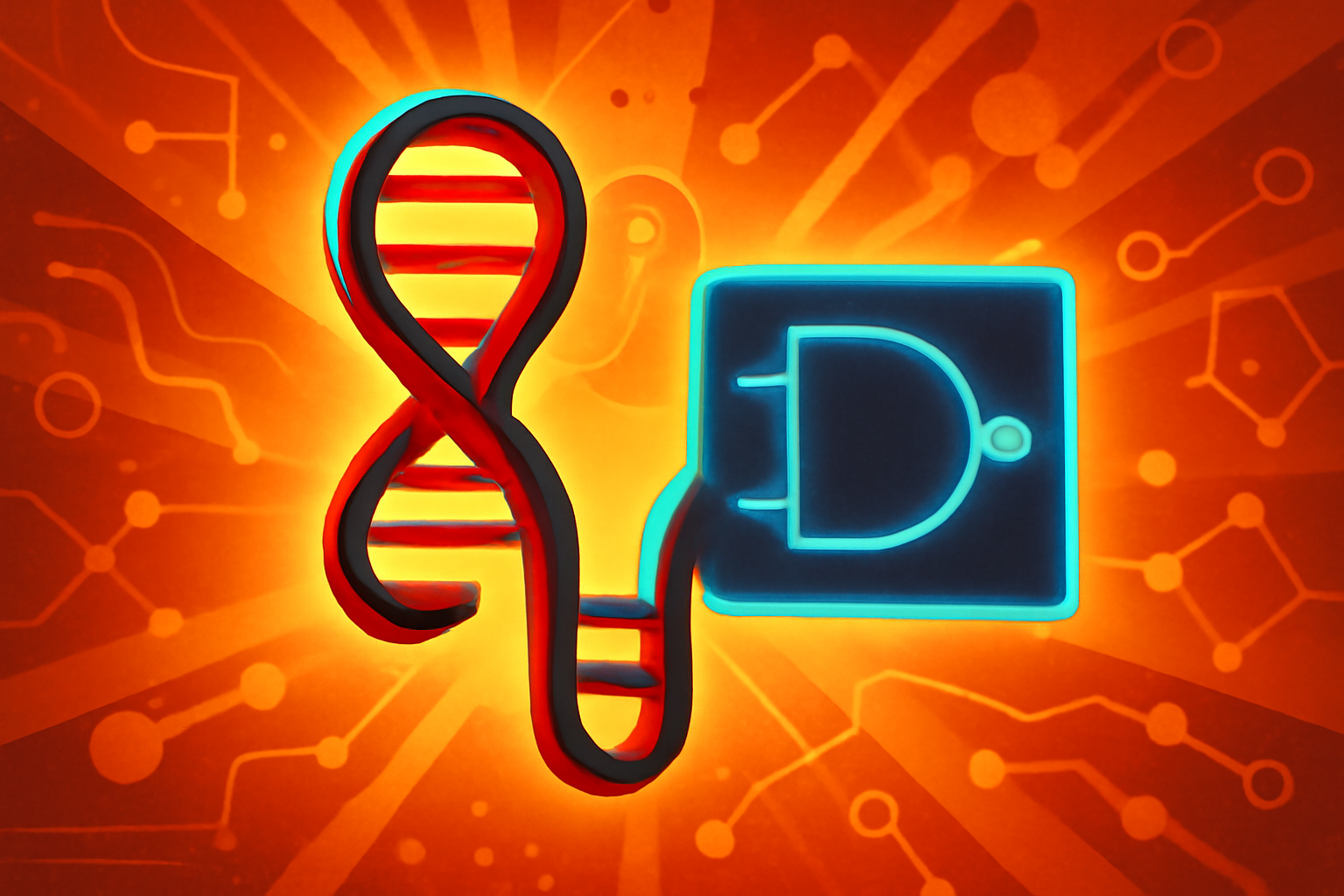
A conceptual 3D render showing an RNA molecule with embedded digital circuit elements, symbolizing AI-designed genetic logic gates.
Photo: Kronos News
Researchers at TU Darmstadt have developed synthetic RNA-based genetic switches that mimic computer logic [1][2]. Using deep learning and Bayesian optimization, the team successfully engineered riboswitches to process multiple biochemical signals simultaneously [1]. This allows living cells to perform complex logical functions, including Boolean NAND gates [1][2]. These "smart" cells can now make autonomous decisions based on their molecular environment [2][3]. By treating genetic pathways as digital circuits, the team bridges the gap between computing and molecular biology [1][3]. This AI-driven approach could eventually lead to highly targeted medical treatments and advanced synthetic systems [1].
Editorial notes
Transparency note
Drafted with LLM; human-edited
- AI assisted
- Yes
- Human review
- Yes
- Last updated
Risk assessment
Reviewed for sourcing quality and editorial consistency.
Sources
Related stories
View all


Topics
About the author
Kronos News Desk covers ai health & biotechnology and editorial analysis for Kronos News.