
AI Science & Discovery
Microplastics Generate Radicals at Water Interfaces
A Nature study found hydroxyl radical formation across six plastics, but it does not establish harm from human exposure.
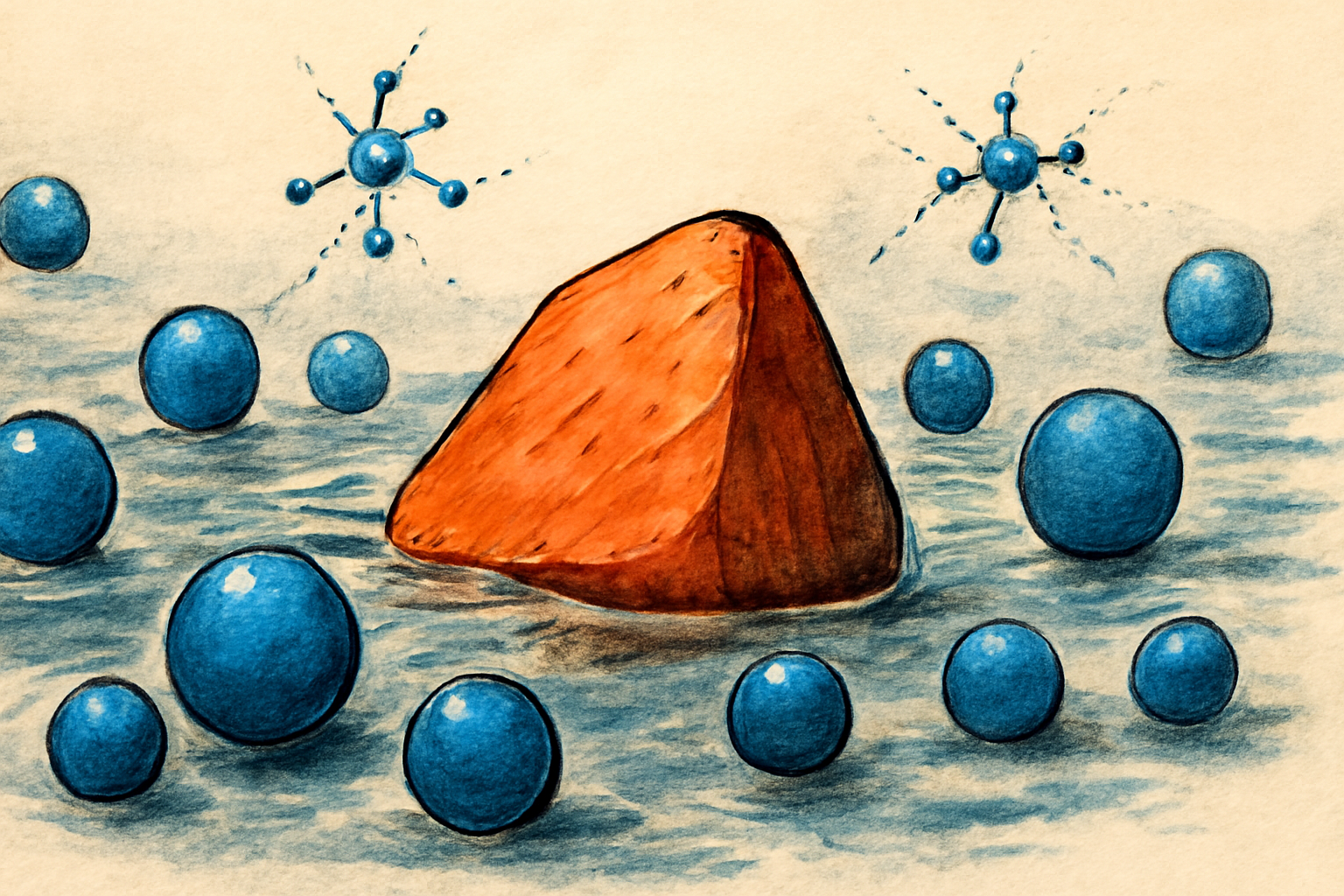
Illustration of irregular microplastic particles meeting water, with subtle molecular ripples around their surfaces.
Photo: Kronos News
Microplastics can generate hydroxyl radicals where their surfaces meet water, according to a Nature study, revealing chemical activity that may help explain how plastic particles interact with their surroundings. Researchers detected radical generation across six common plastics, with activity increasing alongside surface hydrophobicity—the tendency of a surface to repel water. [1]
In laboratory experiments, the team also reported effects involving biomolecule adsorption, protein aggregation and cellular damage. The findings describe reactions under experimental conditions; they do not establish that microplastics cause health effects in people exposed to them in everyday settings. [1]
The authors say the interface between water and microplastic surfaces may be a previously overlooked source of reactive chemistry. How strongly this process occurs in real-world environmental or biological conditions remains uncertain. [1]
Editorial notes
Transparency note
AI assisted drafting. Human edited and reviewed.
- AI assisted
- Yes
- Human review
- Yes
- Last updated
Risk assessment
The reported laboratory findings do not establish effects from real-world human exposure; the article states this limitation and avoids claims of proven health harm.
Sources
Related stories
View all

Topics
About the author
Kronos News Desk covers ai science & discovery and editorial analysis for Kronos News.