
AI Science & Discovery
Neanderthal shoulder wound points to wooden spear
A 75,000-year-old shoulder-blade injury fits a wooden weapon, but the evidence is indirect.
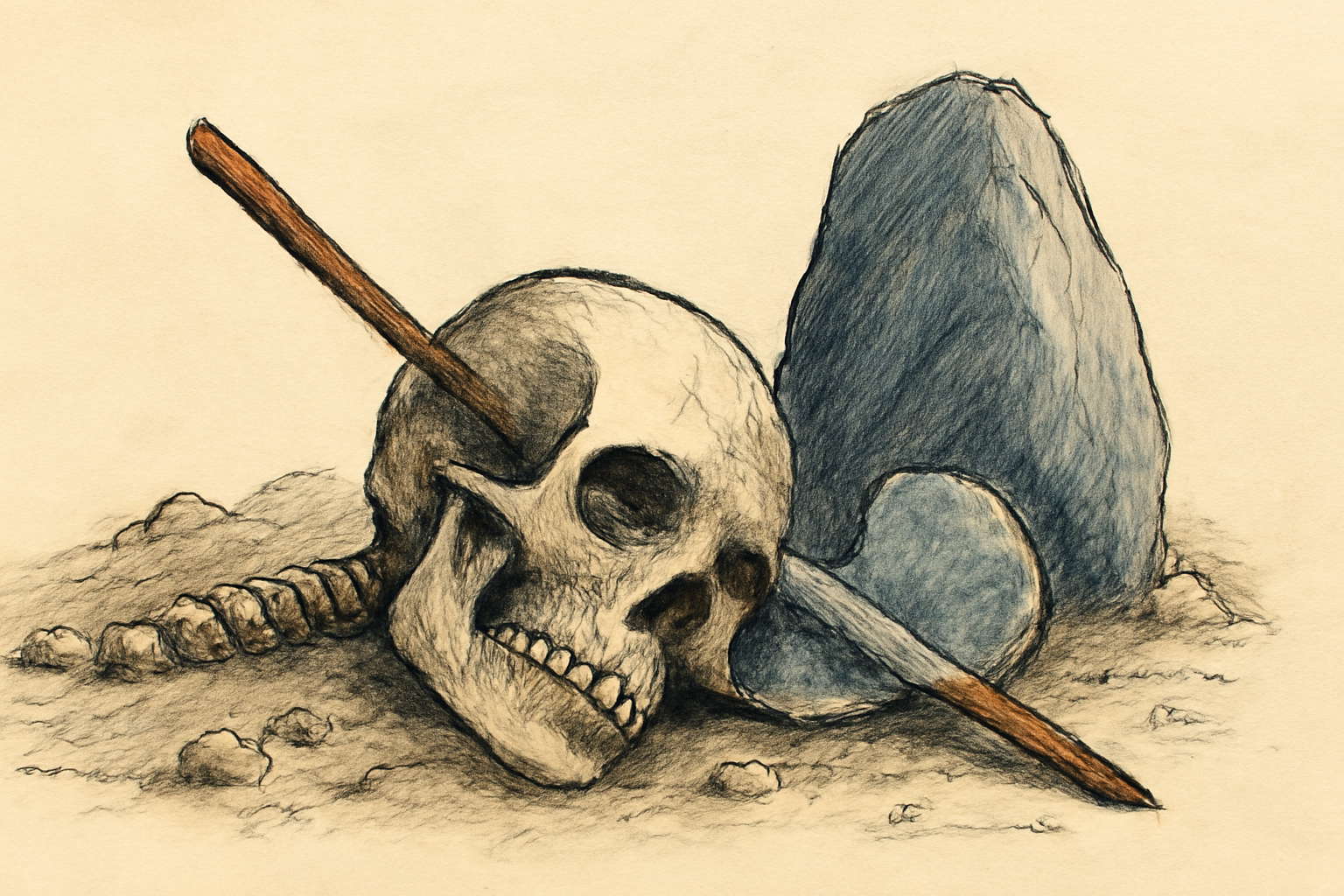
Illustration of an ancient shoulder blade with a small round hole, partly embedded in cave sediment.
Photo: Kronos News
Researchers report that a roughly 75,000-year-old Neanderthal from Shanidar Cave had a circular, approximately 15-millimeter hole in the shoulder blade, with fractures and other features consistent with a penetrating injury around the time of death. [1]
The researchers say the wound’s shape is consistent with a rounded wooden spear, rather than a stone-tipped weapon, but stress that this is indirect evidence; the injury alone cannot establish how the spear was used or whether it resulted from an accident or interpersonal violence. [1]
The remains, named Shanidar A, also add to a cluster of Neanderthal individuals deposited in the cave over multiple events; the study raises the cluster’s minimum count to five and interprets the repeated use of the location as patterned behavior. [1] The meaning of that behavior remains difficult to determine, and the authors note that interpretations of Neanderthal funerary practices remain debated. [1]
Editorial notes
Transparency note
AI assisted drafting. Human edited and reviewed.
- AI assisted
- Yes
- Human review
- Yes
- Last updated
Risk assessment
The article relies on one research paper, and the wooden-spear interpretation is indirect.
Sources
Related stories
View all


Topics
About the author
Kronos News Desk covers ai science & discovery and editorial analysis for Kronos News.