
Stanford AI Swarm Simulates Full Biotech Pipeline
Researchers deploy 37,000 AI agents to streamline drug discovery from target selection to clinical trial design.
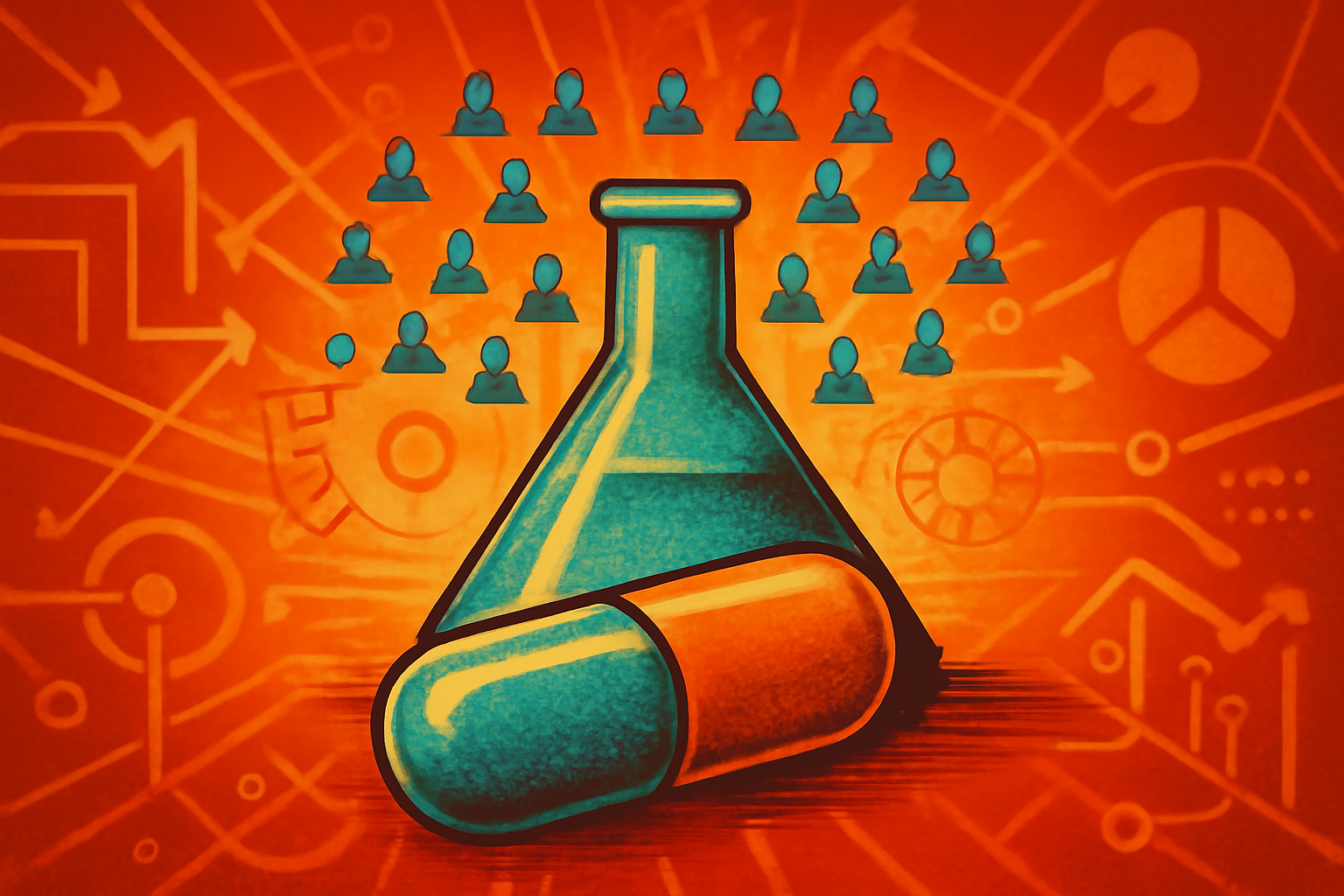
A digital illustration showing a complex network of thousands of small, glowing nodes representing AI agents collaborating on a drug development pipeline.
Photo: Kronos News
Stanford University researchers launched "Virtual Biotech," a framework utilizing 37,000 AI scientist agents to simulate drug development [1]. This system manages the full process from identifying biological targets to designing clinical trials [1][3]. The study, published in Science, shows how coordinated agents improve drug success rates [1][2].
The AI swarm identifies biological features linked to lower adverse events and higher effectiveness [1]. By simulating thousands of scenarios, the framework predicts potential failures before physical testing starts [3]. This approach aims to reduce the high costs and time of traditional pharmaceutical research [2].
Editorial notes
Transparency note
AI assisted drafting. Human edited and reviewed.
- AI assisted
- Yes
- Human review
- Yes
- Last updated
Risk assessment
Reviewed for sourcing quality and editorial consistency.
Sources
- 1.↗
Stanford Medicine
Stanford Researchers Develop "Virtual Biotech" with 37,000 AI Scientist Agents
A team led by Stanford University researchers has introduced "Virtual Biotech," a multi-agent AI framework comprising tens of thousands of specialized AI agents that simulate the full pipeline of a drug development company, from target discovery to clinical trial design. The results, published in Science, demonstrate how coordinated AI swarms can identify biological features associated with higher drug success rates and lower adverse events.
Back to reference
Related stories
View all


About the author
Kronos News Desk covers news and editorial analysis for Kronos News.