
AI Science & Discovery
UTC to Allow Hour Drift as Leap Seconds End
A new limit, effective May 20, 2027, is intended to avoid disruptive second-by-second clock changes.
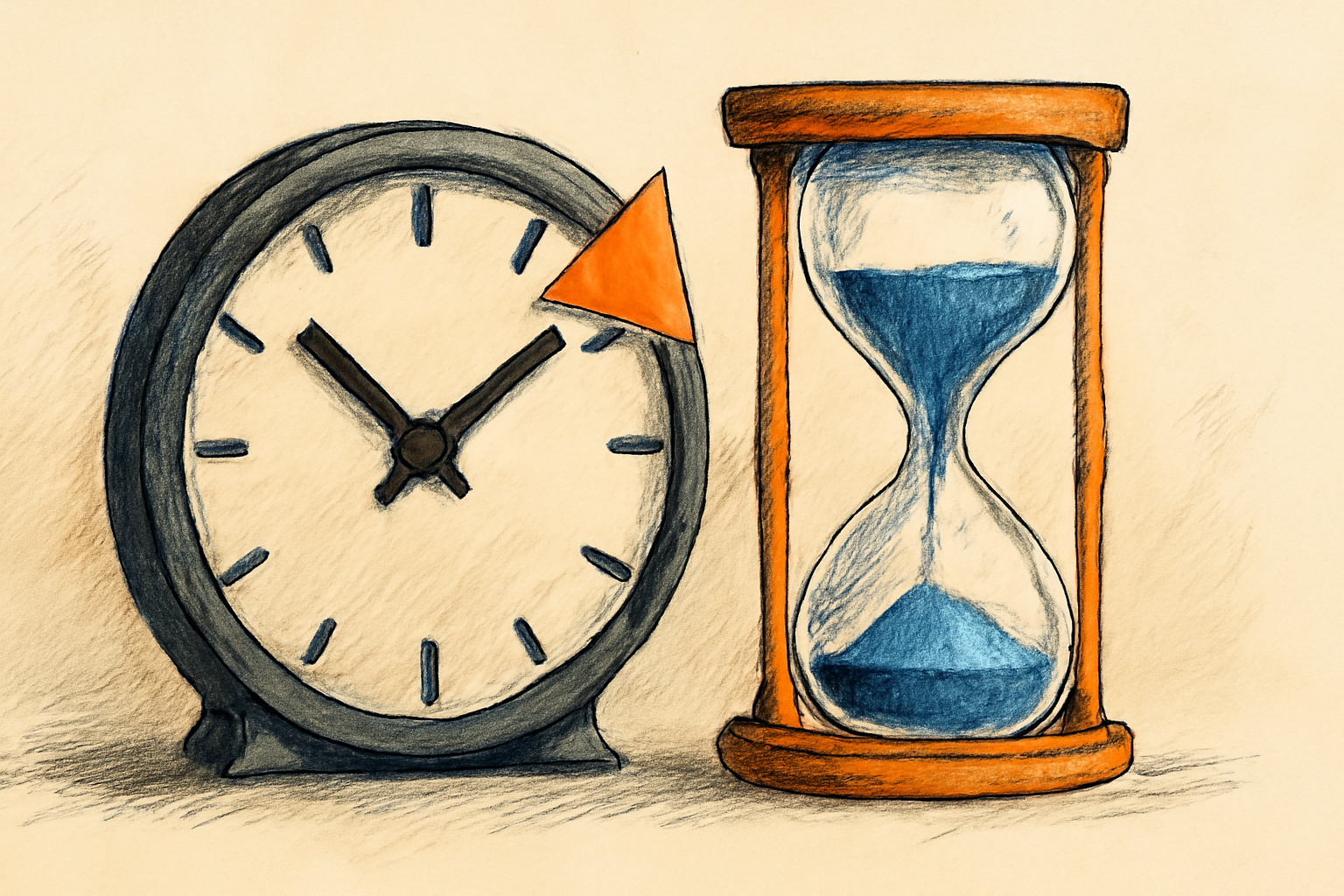
An atomic clock beside an analog clock, with Earth in the background, illustrating the shift away from leap-second adjustments.
Photo: Kronos News
On October 15, 2026, the General Conference on Weights and Measures voted to end the use of leap seconds to keep Coordinated Universal Time (UTC) aligned with Earth’s rotation. From May 20, 2027, UTC may differ from astronomical time by as much as one hour before an adjustment is required. [1]
The change is intended to reduce risks for computer networks and other infrastructure that can be disrupted by leap-second adjustments. It does not sever the relationship between UTC and Earth’s rotation: the difference will continue to be monitored and reported. The first hour-scale adjustment is not expected for thousands of years, according to The Guardian; it is a future threshold, not an immediate change to clocks. [1][3]
Editorial notes
Transparency note
AI assisted drafting. Human edited and reviewed.
- AI assisted
- Yes
- Human review
- Yes
- Last updated
Risk assessment
Reviewed for sourcing quality and editorial consistency.
Sources
Related stories
View all

Topics
About the author
Kronos News Desk covers ai science & discovery and editorial analysis for Kronos News.