
AI Models & Agents
AI Accuracy Increases With Human Social Cues
Researchers in Tokyo found that allowing AI to interrupt or remain silent improves complex reasoning performance.
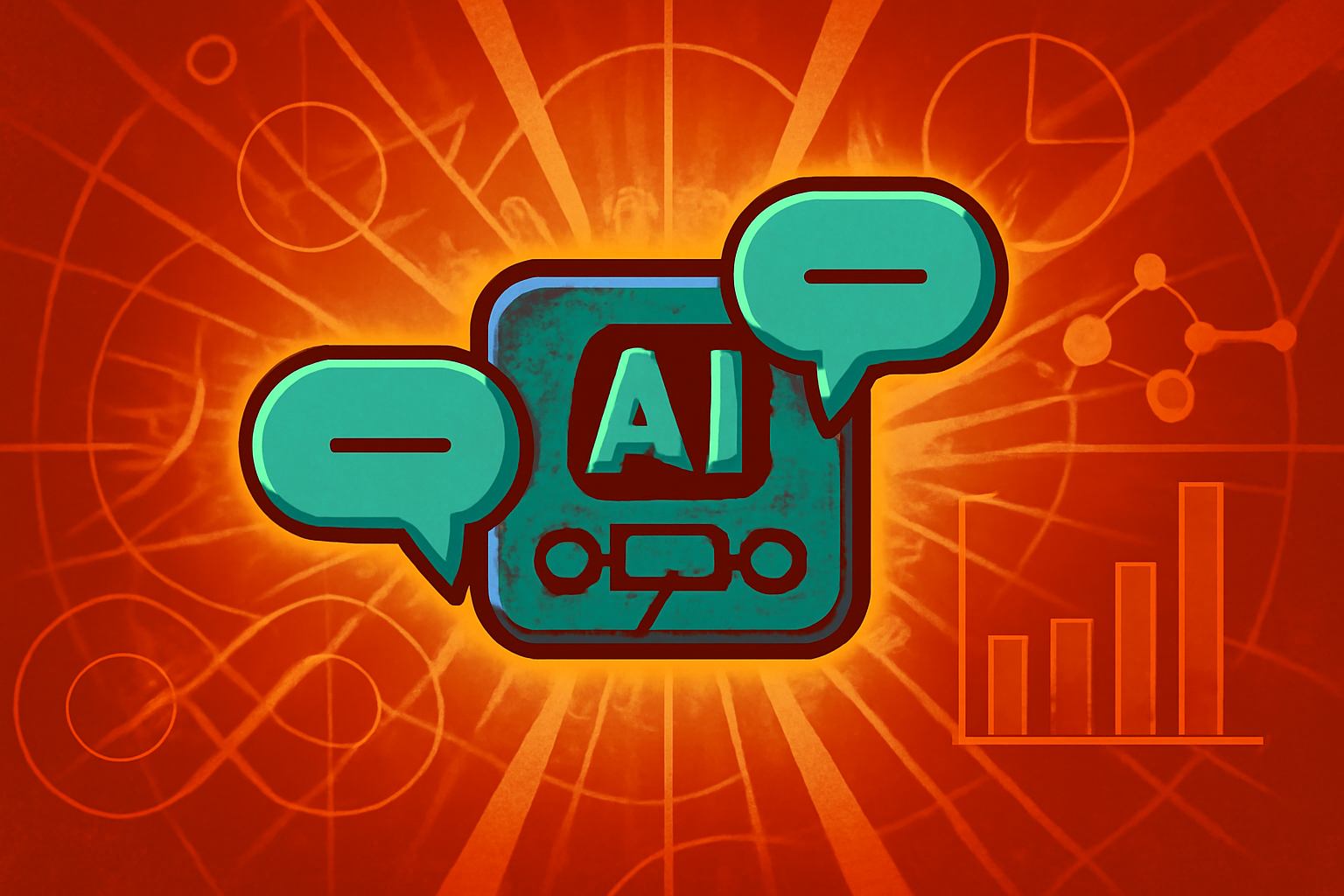
Two digital AI silhouettes in a modern research setting interact with glowing holographic charts and data points.
Photo: Kronos News
Researchers at Tokyo's University of Electro-Communications discovered that AI agents perform better when they mimic human conversational habits [1]. By allowing models to interrupt each other or stay silent, they achieved higher accuracy on the Massive Multitask Language Understanding (MMLU) benchmark [1][2]. This approach replaces the standard rigid turn-taking found in traditional AI interactions [1]. The study suggests that these more natural social cues help AI agents navigate complex reasoning tasks more effectively [1]. Researchers observed significant improvements in how the agents processed information during collaborative problem-solving exercises [2]. This development could lead to more natural and efficient communication between humans and AI systems in the future [1].
Editorial notes
Transparency note
Drafted with LLM; human-edited
- AI assisted
- Yes
- Human review
- Yes
- Last updated
Risk assessment
Risk level set to high because the story relies on fewer than three independent source domains as recommended by internal guidelines.
Sources
- 1.↗
livescience.com
https://www.livescience.com/technology/artificial-intelligence/scientists-made-ai-agents-ruder-and-they-performed-better-at-complex-reasoning-tasks
- 2.↗
thehelper.net
https://www.thehelper.net/threads/scientists-made-ai-agents-ruder-%E2%80%94-and-they-performed-better-at-complex-reasoning-tasks.200595/
Related stories
View all
Topics
About the author
Kronos News Desk covers ai models & agents and editorial analysis for Kronos News.