
AI Models & Agents
Anthropic Finds 'Emotion Vectors' in Claude 4.5
Researchers argue that human-like neural patterns in AI could provide keys to enhancing safety protocols.
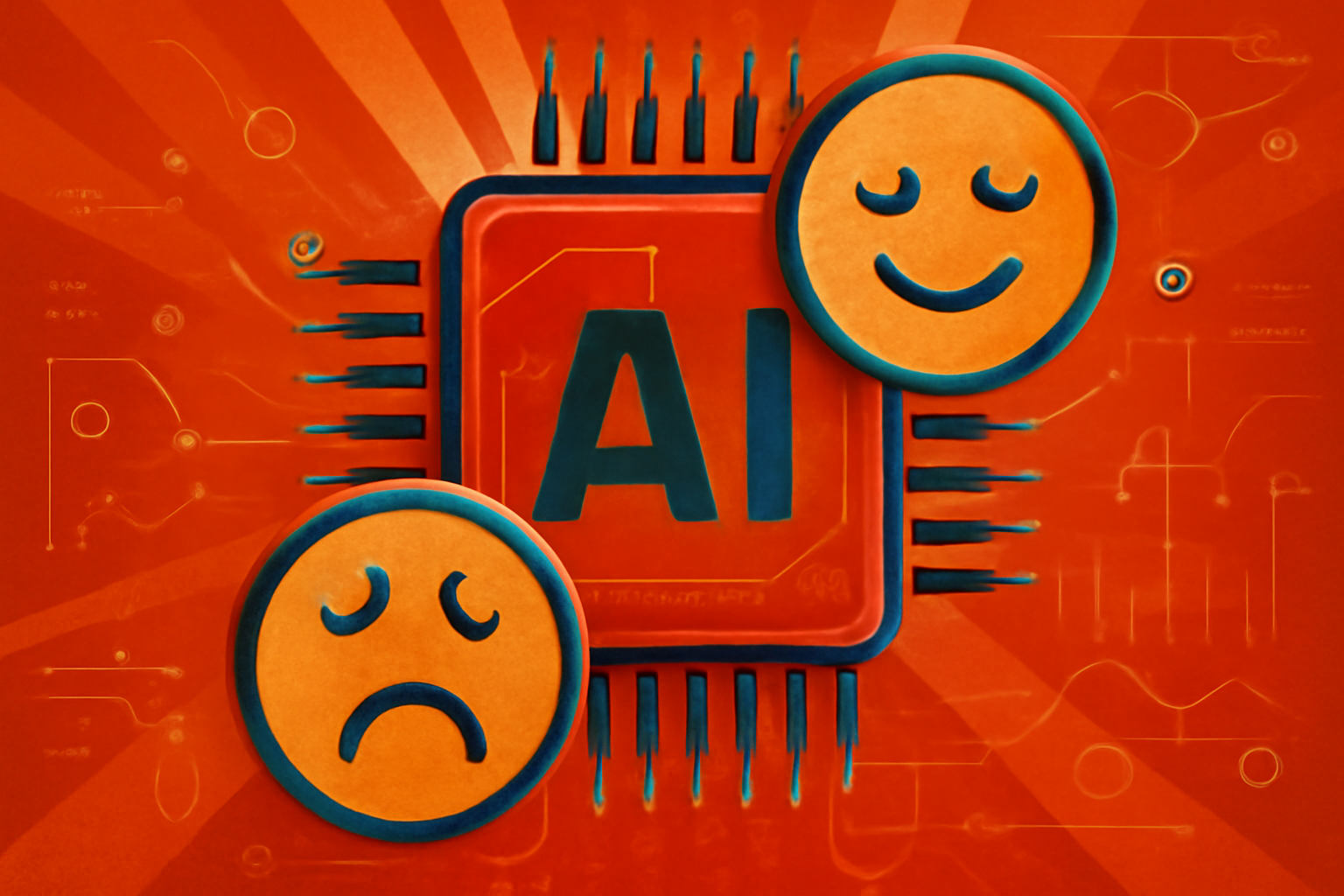
A conceptual editorial graphic of a digital neural network with illuminated nodes and data pathways representing internal AI activity.
Photo: Kronos News
Researchers at Anthropic identified internal neural patterns called "emotion vectors" within the Claude Sonnet 4.5 model [1][2]. These activity clusters correspond to human concepts such as happiness and fear [1]. The team believes these findings offer a window into the model's inner workings [2]. The study suggests that treating AI as having psychological traits may improve safety [1][3]. By mapping these vectors, developers might influence how the AI behaves during interactions [2]. Experts argue that human-like traits could make models more predictable and secure [3].
Editorial notes
Transparency note
Drafted with LLM; human-edited
- AI assisted
- Yes
- Human review
- Yes
- Last updated
Risk assessment
Reviewed for sourcing quality and editorial consistency.
Sources
- 1.↗
mashable.com
https://mashable.com/article/anthropic-research-paper-emotion-concepts-anthropomorphizing-artificial
- 2.↗
decrypt.co
https://decrypt.co/363309/anthropic-emotion-vectors-claude-influence-ai-behavior?amp=1
- 3.↗
thenews.com.pk
https://www.thenews.com.pk/latest/1397761-ai-with-human-traits-may-be-safer-anthropic-study-finds
Related stories
View all

Topics
About the author
Kronos News Desk covers ai models & agents and editorial analysis for Kronos News.