
AI Science & Discovery
ChatGPT Struggles with Scientific Reasoning, Study Finds
Research reveals AI models often provide contradictory answers despite looking accurate on the surface.
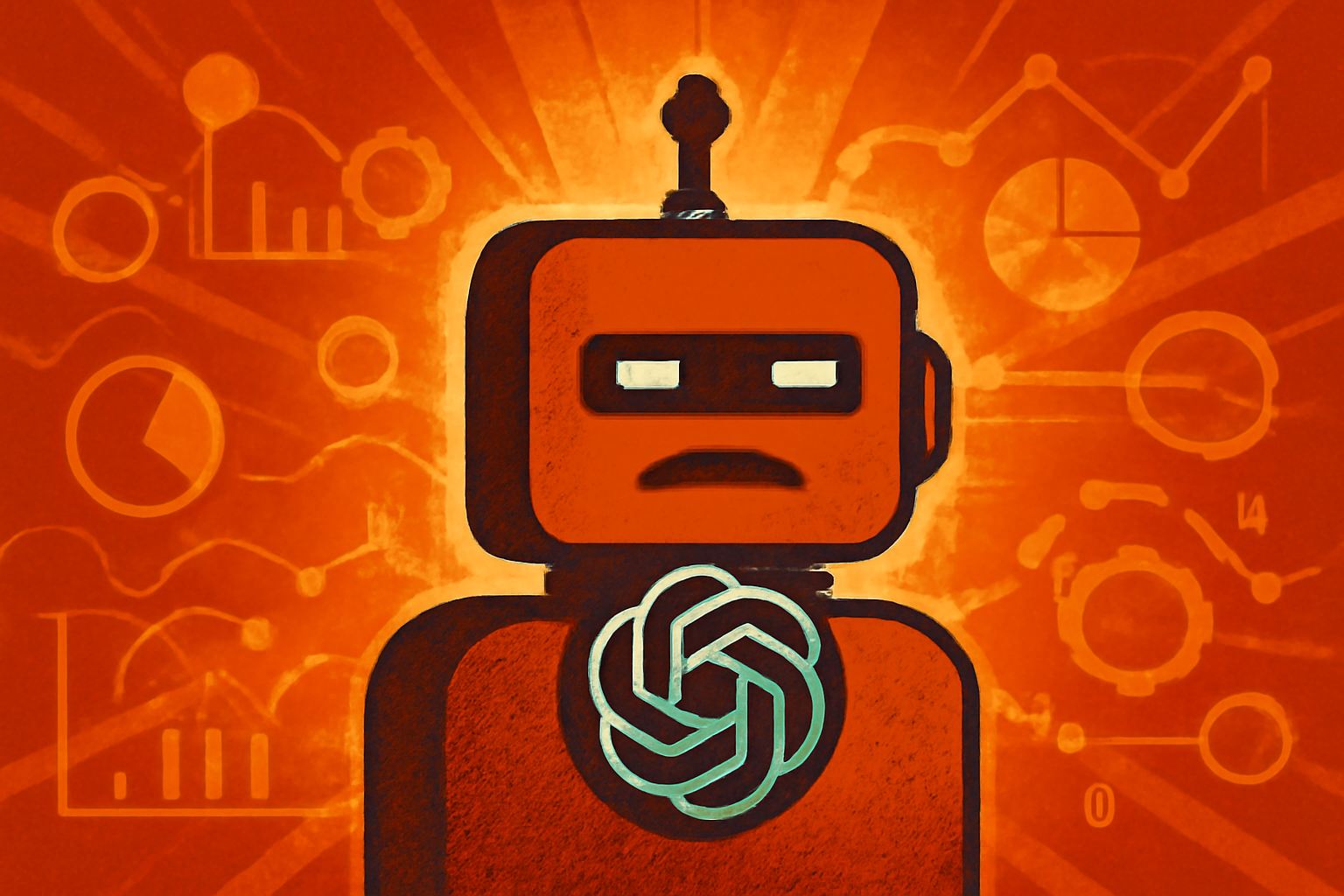
An editorial illustration of an AI robot inspecting a scientific formula that is breaking apart, representing logical inconsistencies in machine learning models.
Photo: Kronos News
Researchers from Washington State University recently evaluated how ChatGPT handles scientific hypotheses [1]. While the AI appeared to be 80% accurate at first glance, its actual reasoning performance was only slightly better than chance [1][2]. This indicates that the model often arrives at correct answers through flawed logic or pattern matching rather than genuine understanding [2]. The study also highlighted significant inconsistency in the AI's outputs [1][3]. ChatGPT frequently provided contradictory answers when asked the same scientific questions multiple times [1]. This variability poses a major challenge for researchers who might rely on generative AI for data interpretation or hypothesis testing [3]. Experts suggest that while AI can assist in academic tasks, its scientific reliability remains fundamentally limited [2]. These findings underscore the critical need for human oversight in technical and medical applications to prevent the spread of logical errors [1].
Editorial notes
Transparency note
Drafted with LLM; human-edited
- AI assisted
- Yes
- Human review
- Yes
- Last updated
Risk assessment
Reviewed for sourcing quality and editorial consistency.
Sources
Related stories
View all

Topics
About the author
Kronos News Desk covers ai science & discovery and editorial analysis for Kronos News.