
AI Robotics & Autonomy
Harvard Unveils Diffusion-MPC for Legged Robots
New generative AI control system allows quadruped robots to adapt to complex terrains in real-time without retraining.
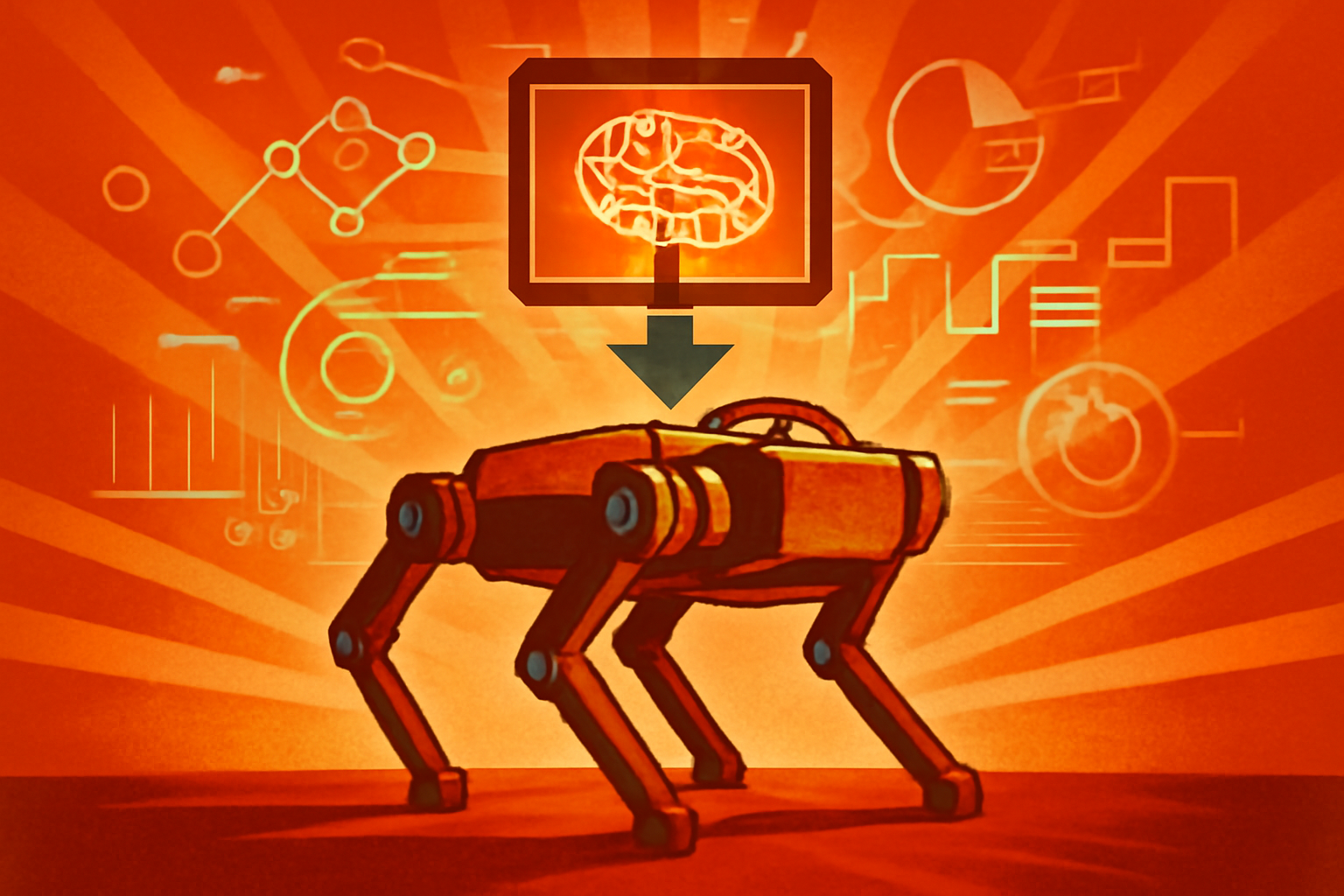
A four-legged robot walks across a simulated rocky terrain in a research lab, illustrating the Diffusion-MPC AI system's real-time adaptability.
Photo: Kronos News
Researchers from Harvard University and the Kempner Institute introduced Diffusion-MPC, a generative AI system for quadruped robots [1]. This technology enables robots to adjust their movement and tasks instantly when facing new terrains or objectives [1].
Traditional models often require fixed behavior patterns or extensive retraining for specific environments [1]. Diffusion-MPC bypasses these limits by generating adaptive control sequences on the fly [1].
The system proves versatile across various legged platforms [1]. It allows for fluid transitions between different walking styles without human intervention or pre-set instructions [1].
Editorial notes
Transparency note
AI assisted drafting. Human edited and reviewed.
- AI assisted
- Yes
- Human review
- Yes
- Last updated
Risk assessment
The story relies on a single primary source from the institution that conducted the research.
Sources
- 1.↗
Kempner Institute at Harvard
New AI-Powered Control System 'Diffusion-MPC' for Legged Robots
A research team led by Harvard University and the Kempner Institute has developed Diffusion-MPC, a generative AI-based control system for quadruped robots. The system allows robots to adapt their movements and tasks in real-time to new terrains and objectives without requiring additional retraining or fixed behavior models.
Back to reference
Related stories
View all


Topics
About the author
Kronos News Desk covers ai robotics & autonomy and editorial analysis for Kronos News.