
AI Health & Biotechnology
Low Spinal Bone Density Linked to Brain Changes
A study of 715 people found an association with white matter changes and faster cognitive decline, not proof of cause.
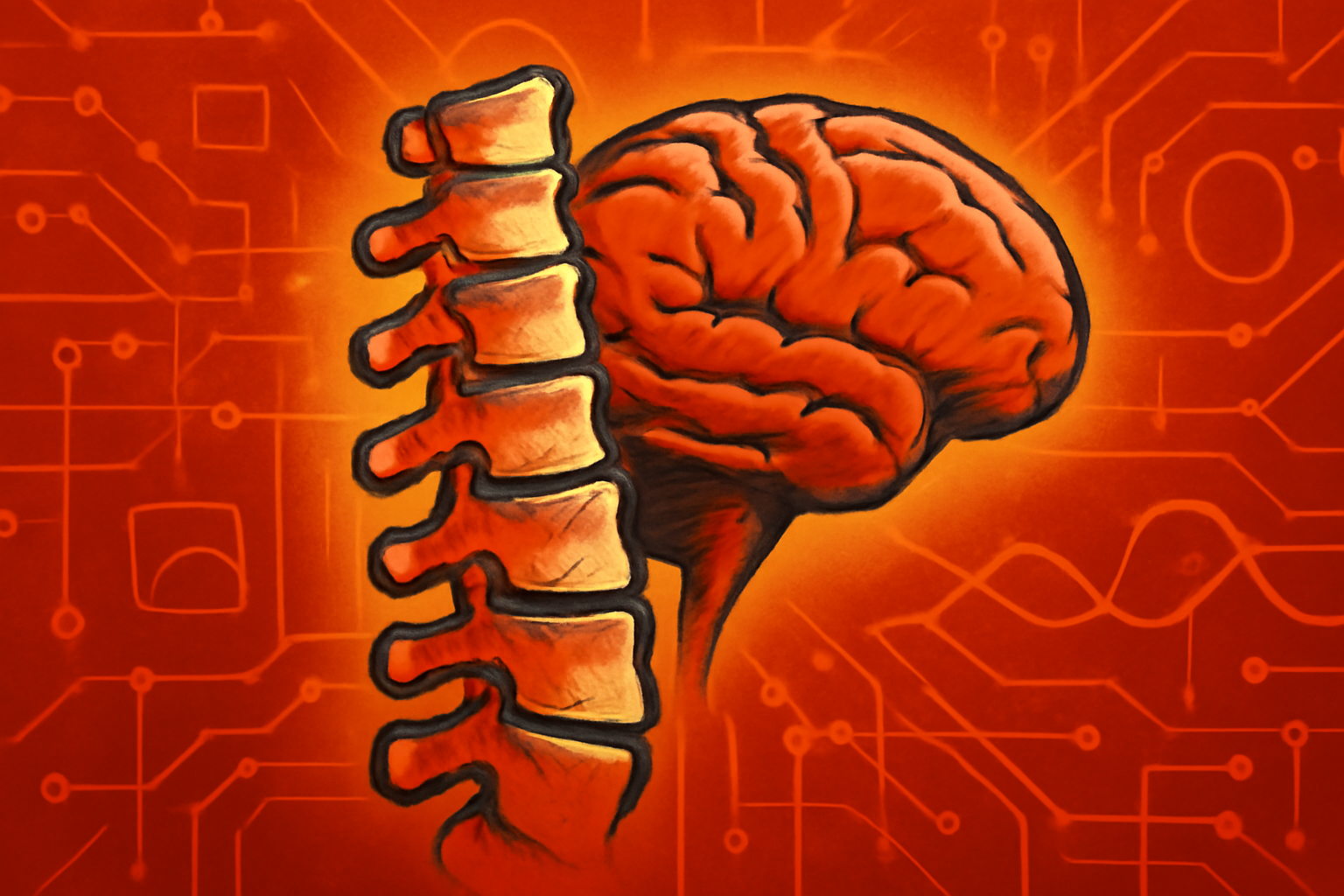
Editorial illustration of chest CT and brain MRI images displayed side by side, highlighting the spine and brain white matter.
Photo: Kronos News
A longitudinal analysis of 715 participants found that lower bone mineral density in the spine was associated with changes in brain white matter and faster decline on cognitive tests. The findings suggest bone density may track with aspects of brain aging, but do not show that weaker bones cause cognitive decline. [1]
Researchers used an AI algorithm to estimate bone density from chest CT scans, then compared those measurements with brain imaging and cognitive assessments collected over several years. The study was a secondary analysis of existing data; the authors noted that shared factors could contribute to both bone and brain changes. Further research is needed to determine whether the association predicts diagnosed conditions or has clinical use. [1]
Editorial notes
Transparency note
AI assisted drafting. Human edited and reviewed.
- AI assisted
- Yes
- Human review
- Yes
- Last updated
Risk assessment
The report relies on one secondary news source summarizing a study.
Sources
Related stories
View all

Topics
About the author
Kronos News Desk covers ai health & biotechnology and editorial analysis for Kronos News.