
AI Health & Biotechnology
Matched meals, different short-term metabolic responses
A small meal experiment found higher insulin levels after an ultra-processed meal, despite matched calories and nutrients.
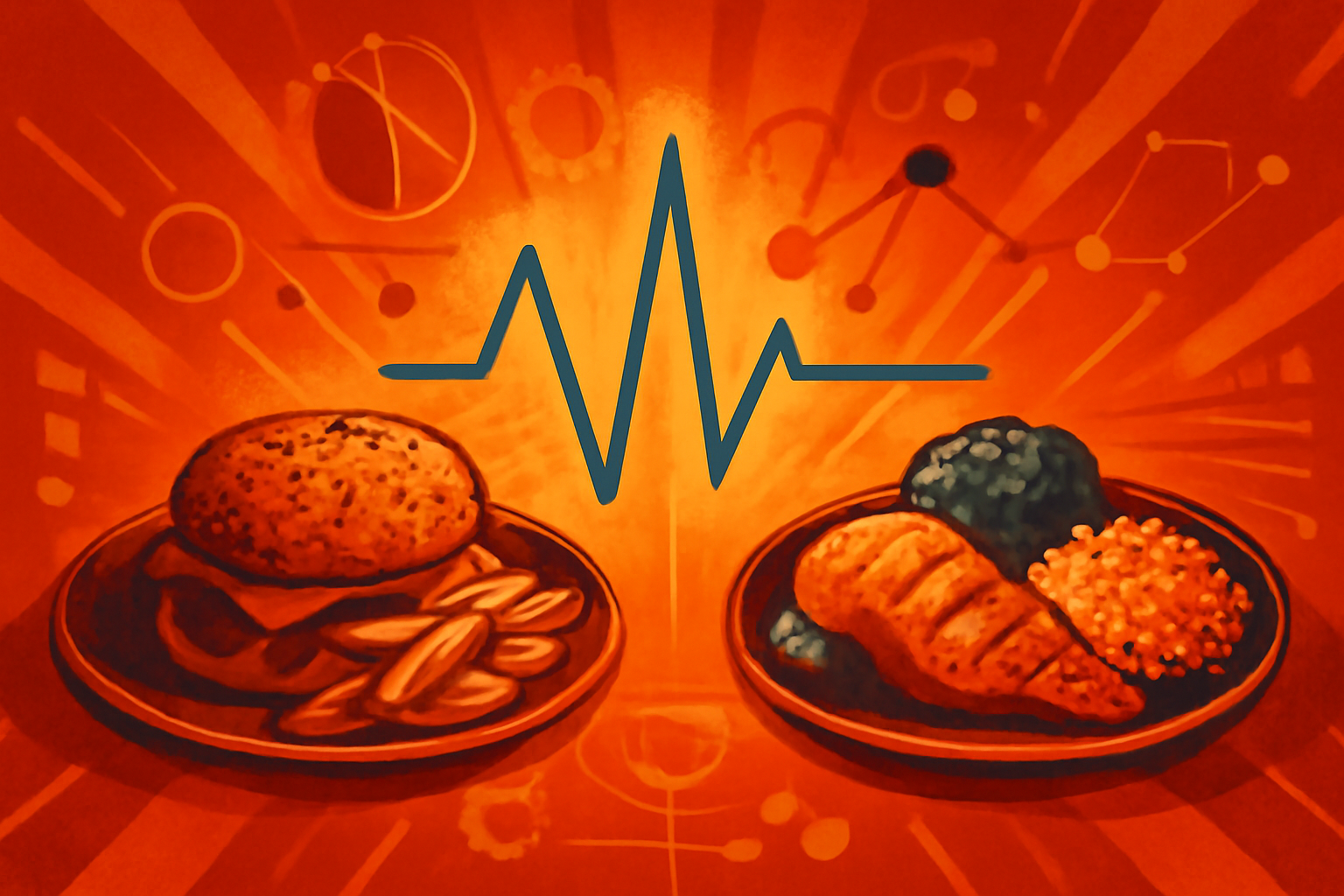
Two similarly sized meals, one made up of packaged convenience foods and the other of minimally processed foods, shown side by side.
Photo: Kronos News
A randomized crossover experiment found different short-term metabolic responses after participants ate ultra-processed and minimally processed meals matched for calories and key nutrients. The results suggest processing may matter beyond what a nutrition label captures, but they do not establish long-term health effects. [1]
ScienceAlert reports that 32 participants ate each 300-calorie meal on separate days in randomized order; 57 healthy-weight adults were recruited across the study. Over three hours, blood glucose responses were broadly similar, though glucose stayed elevated longer after the ultra-processed meal. Insulin rose higher and remained elevated for about two hours. [1]
The ultra-processed meal was also associated with higher metabolic rate and fat burning, and lower carbohydrate burning during the observation period. The study’s short follow-up and limited meal experiment cannot show whether these differences affect health over time; researchers’ explanations for the results remain hypotheses. [1]
Editorial notes
Transparency note
AI assisted drafting. Human edited and reviewed.
- AI assisted
- Yes
- Human review
- Yes
- Last updated
Risk assessment
The supplied Nature Metabolism paper could not be accessed for verification.
Sources
Related stories
View all


Topics
About the author
Kronos News Desk covers ai health & biotechnology and editorial analysis for Kronos News.