
AI Health & Biotechnology
Mice reveal a hidden fluid-drainage route behind the retina
The pathway links the back of the eye to lymph nodes, but its role in human health is unknown.
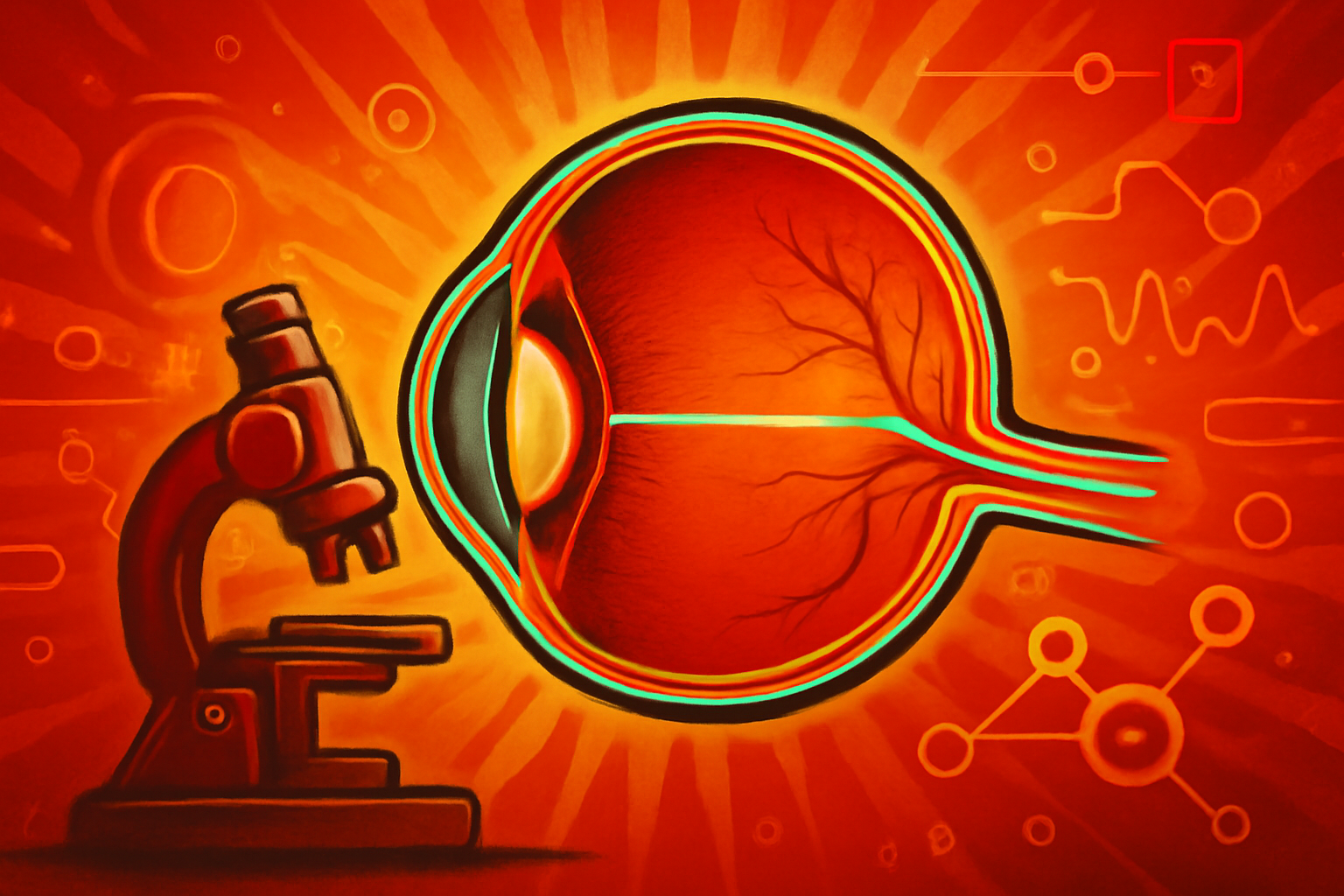
Illustration of a fluid pathway from the back of the eye through the choroid toward nearby lymph nodes.
Photo: Kronos News
Researchers report a previously unidentified drainage route behind the retina in mice, connecting the space at the back of the eye through lymphatic vessels in the choroid to nearby lymph nodes. They tracked fluorescent tracer molecules using imaging and microscopy, and named the route the posterior ocular lymphatic outflow, or POLO, pathway. [1]
The finding offers a possible explanation for how fluid and waste leave the back of the eye, but it does not show that the pathway affects human eye disease or that changing it would treat disease. The experiments were conducted in mice; further research is needed to establish whether the route works similarly in people and whether it is involved in conditions such as glaucoma or macular degeneration. [1]
Editorial notes
Transparency note
AI assisted drafting. Human edited and reviewed.
- AI assisted
- Yes
- Human review
- Yes
- Last updated
Risk assessment
The report is based on one secondary source, and the findings are from mice.
Sources
Related stories
View all

Topics
About the author
Kronos News Desk covers ai health & biotechnology and editorial analysis for Kronos News.