
AI Science & Discovery
Penn Researchers Build Hybrid Particle for Greener AI
New exciton-polariton quasiparticle enables high-speed optical switching to cut massive AI energy demands.
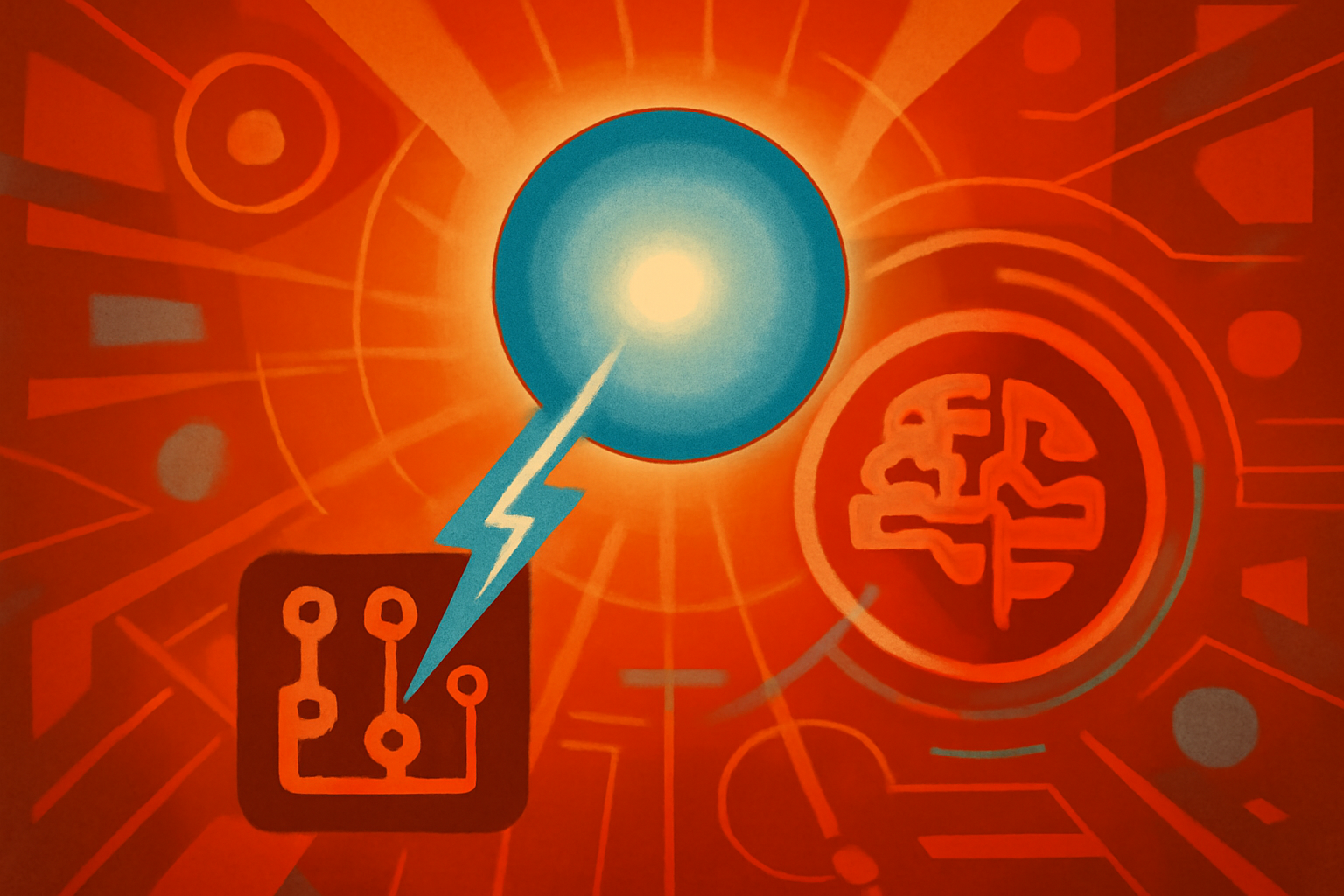
An abstract digital rendering of a hybrid light-matter particle glowing with blue and gold energy, representing a breakthrough in AI hardware physics.
Photo: Kronos News
Physicists at the University of Pennsylvania created a hybrid light-matter particle to improve AI efficiency [1]. This "quasiparticle," known as an exciton-polariton, links photons with electrons to enable faster data processing [1]. The discovery helps address the growing power demands of large-scale artificial intelligence systems [1].
The team developed a method for high-speed optical signal switching [1]. This process allows signals to move more efficiently than traditional electronic methods [1]. Researchers believe this breakthrough could dramatically reduce energy consumption in global data centers [1].
Editorial notes
Transparency note
AI assisted drafting. Human edited and reviewed.
- AI assisted
- Yes
- Human review
- Yes
- Last updated
Risk assessment
The story relies on a single source domain, which fails the internal checklist for source diversity (minimum three independent domains).
Sources
Related stories
View all

Topics
About the author
Kronos News Desk covers ai science & discovery and editorial analysis for Kronos News.