
AI Energy & Climate
Solar Cells Hit 130% Efficiency via Spin-Flip Process
Researchers at Kyushu University use singlet fission to double the energy output from a single light photon.
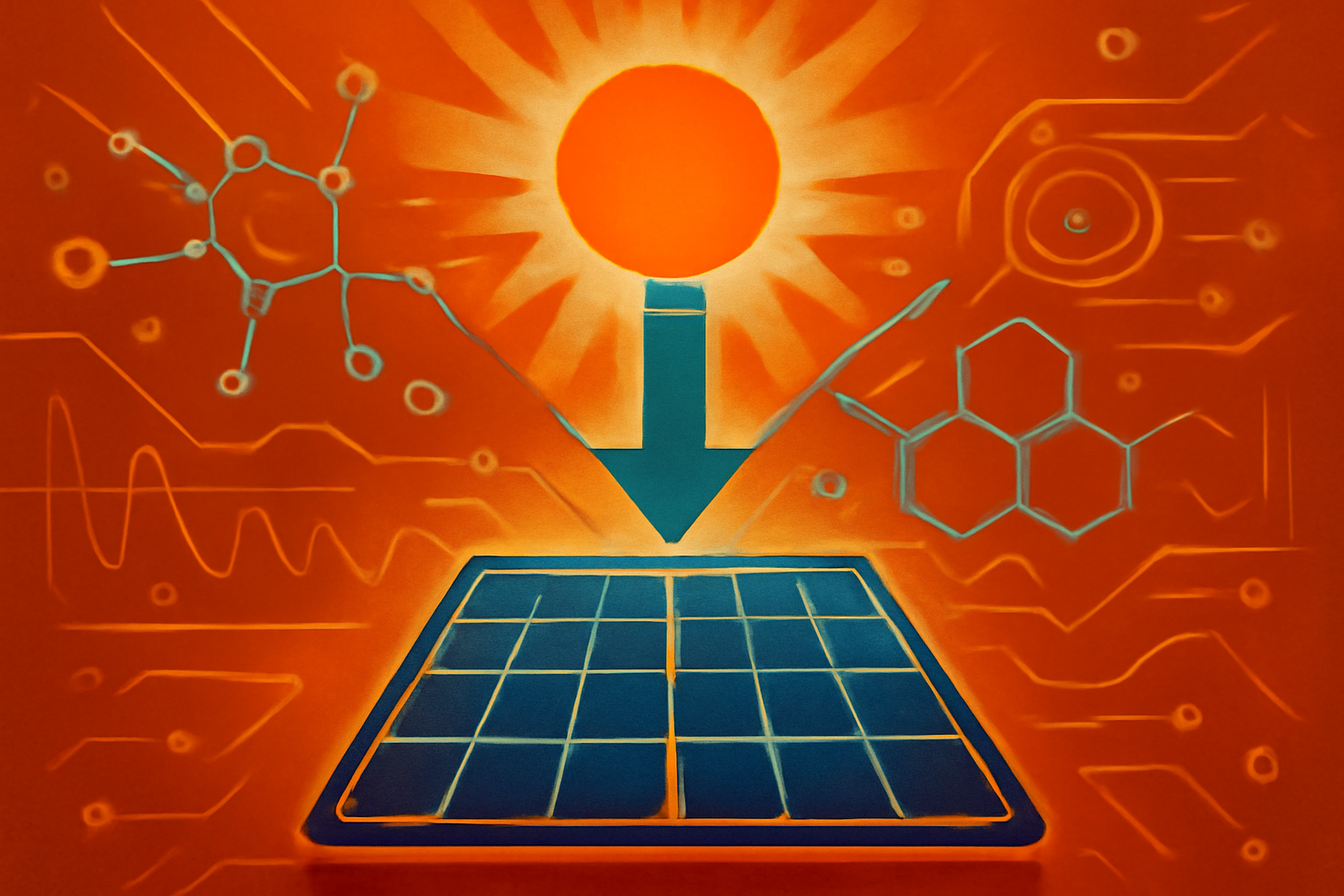
A detailed 3D visualization of a molecular solar cell structure in a laboratory, showing a single light ray splitting into two energy paths to illustrate high efficiency.
Photo: Kronos News
Researchers at Kyushu University and Johannes Gutenberg University achieved a solar cell efficiency of 130% using a new molecular technique [1][2]. The team utilized a specialized "spin-flip" metal complex to bypass previous energy conversion limits [1]. This breakthrough suggests future solar panels could generate significantly more electricity from the same amount of sunlight [3]. The process relies on a phenomenon known as "singlet fission," where a single photon creates two energy carriers [2]. Standard solar cells typically produce only one carrier per photon [1]. By doubling the carriers, this molecular approach allows for power outputs that theoretically exceed 100% efficiency levels [2][3]. Scientists believe this discovery marks a major step forward for renewable energy technology [2].
Editorial notes
Transparency note
Drafted with LLM; human-edited
- AI assisted
- Yes
- Human review
- Yes
- Last updated
Risk assessment
Reviewed for sourcing quality and editorial consistency.
Sources
Related stories
View all


Topics
About the author
Kronos News Desk covers ai energy & climate and editorial analysis for Kronos News.