
AI Space
Teenager’s AI Uncovers 1.5 Million Cosmic Objects
A California student’s machine learning system identifies new quasars and supernovae using NASA data.
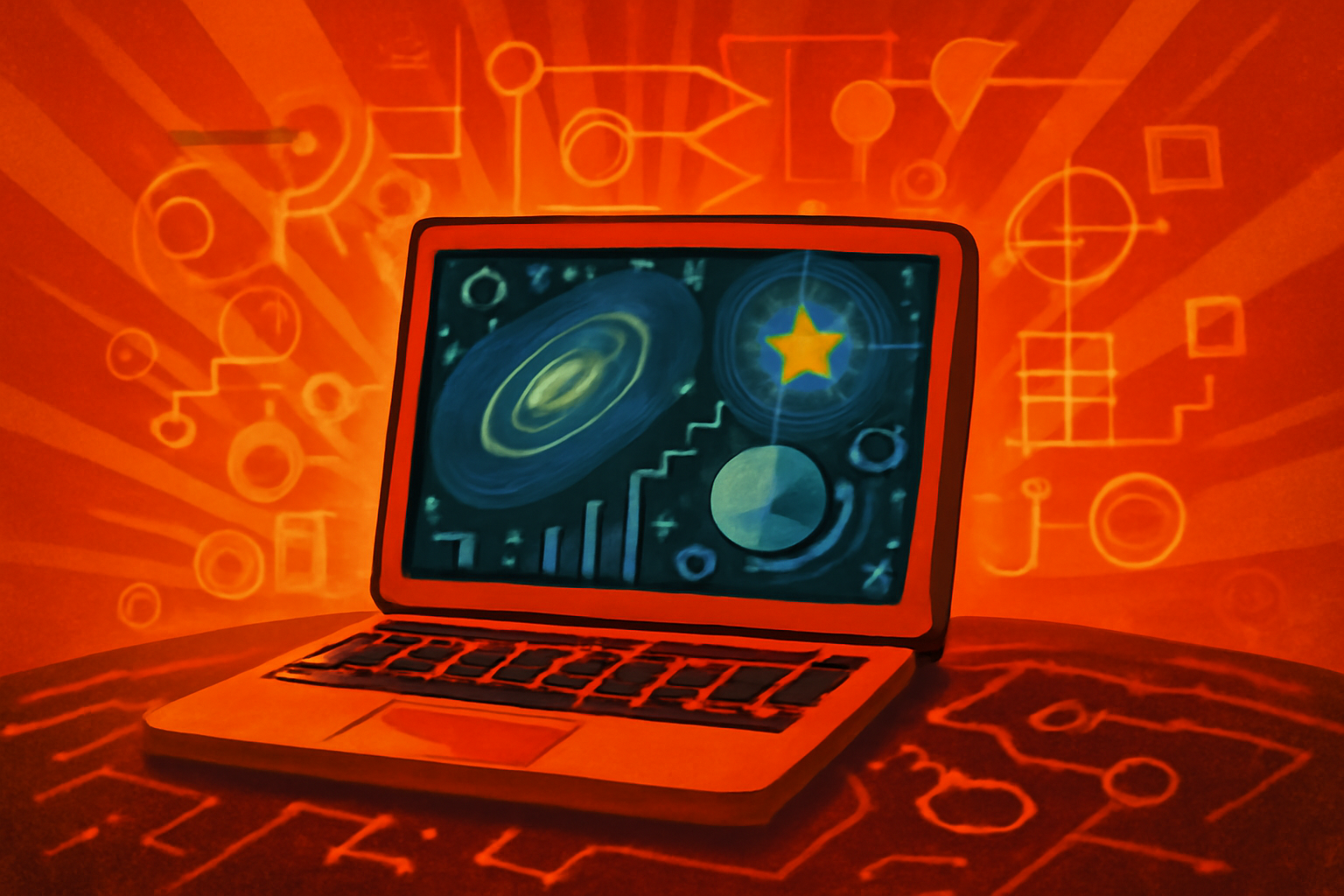
A teenage student viewing a star map and data visualizations on a computer screen showing deep space discoveries.
Photo: Kronos News
A California high school student identified 1.5 million hidden cosmic phenomena using artificial intelligence [1]. The student built a machine learning pipeline to scan archived NASA data [1]. This system found objects such as quasars and supernovae that were previously invisible to researchers [1]. The Astronomical Journal published the findings in a peer-reviewed paper [1]. This discovery demonstrates how advanced computing helps young researchers analyze deep space imagery [1]. The new pipeline allows for faster identification of rare celestial events [1].
Editorial notes
Transparency note
Drafted with LLM; human-edited
- AI assisted
- Yes
- Human review
- Yes
- Last updated
Risk assessment
The report relies on a single source domain (Futura), which fails the internal checklist requirement for three independent domains.
Sources
Related stories
View all
Topics
About the author
Kronos News Desk covers ai space and editorial analysis for Kronos News.