
AI Energy & Climate
UPenn Physicists Build Light-Matter Particle for AI
New hybrid exciton-polaritons promise faster, more energy-efficient artificial intelligence computing systems.
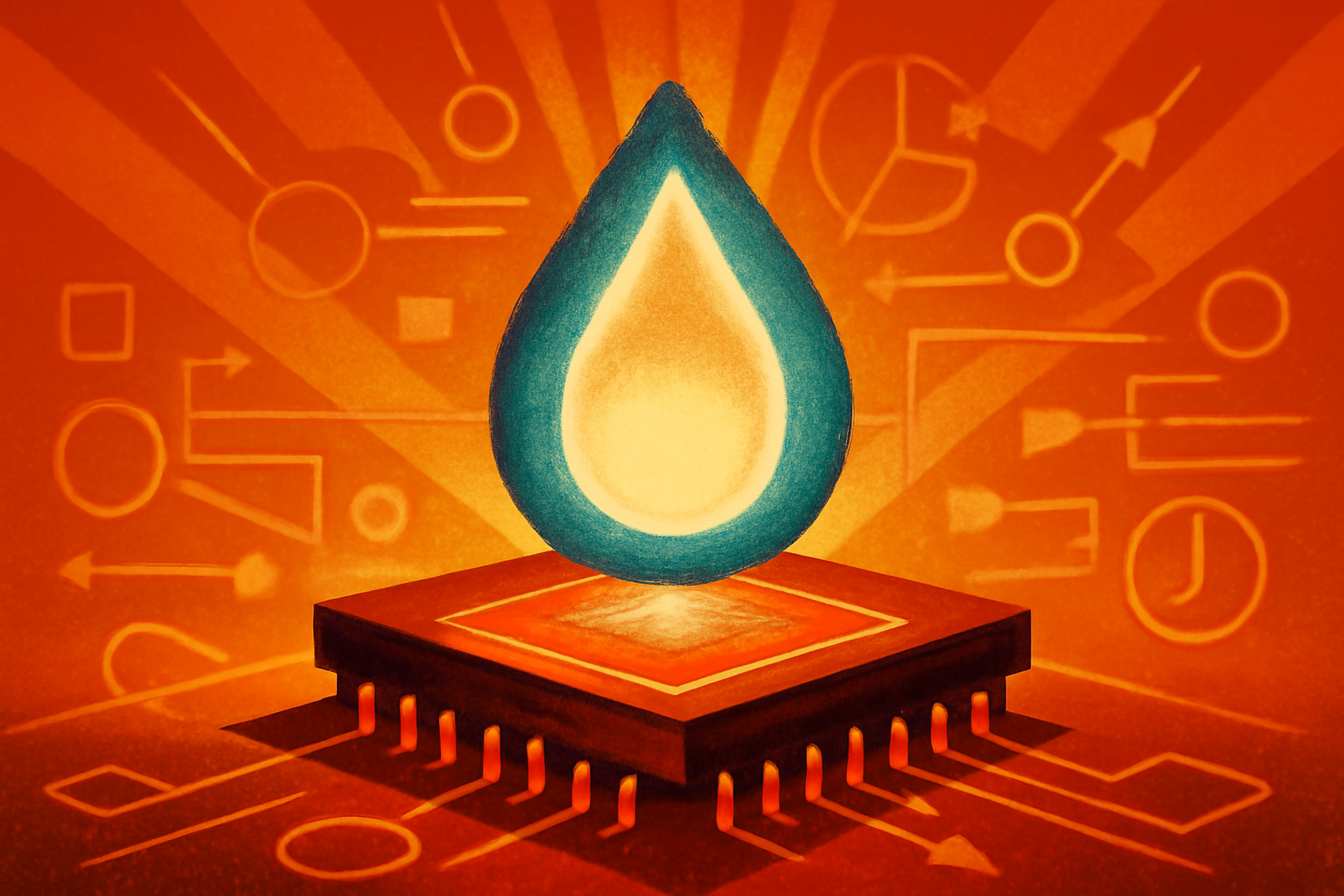
A conceptual scientific visualization of an exciton-polariton particle trapped between reflective layers, glowing with blue light.
Photo: Kronos News
Physicists at the University of Pennsylvania developed a hybrid particle to boost AI computing [1]. This light-matter particle is known as an exciton-polariton [1]. The discovery could speed up data processing while using far less energy [1].
The breakthrough allows light to perform signal switching [1]. Traditional electronic processes often generate heat and run slower [1]. This hybrid particle replaces those operations to improve system efficiency [1].
This discovery supports broader efforts to apply AI to scientific discovery [2]. Researchers hope to use these tools to foster better learning environments and technical breakthroughs [2].
Editorial notes
Transparency note
AI assisted drafting. Human edited and reviewed.
- AI assisted
- Yes
- Human review
- Yes
- Last updated
Risk assessment
The source list contains only two independent domains, which is below the recommended threshold of three for high-certainty verification.
Sources
Related stories
View all
Topics
About the author
Kronos News Desk covers ai energy & climate and editorial analysis for Kronos News.