
AI Energy & Climate
Model projects greater sea-level rise from Thwaites
A UC Irvine–NASA JPL simulation estimates up to 30 millimeters by 2100, even without further warming.
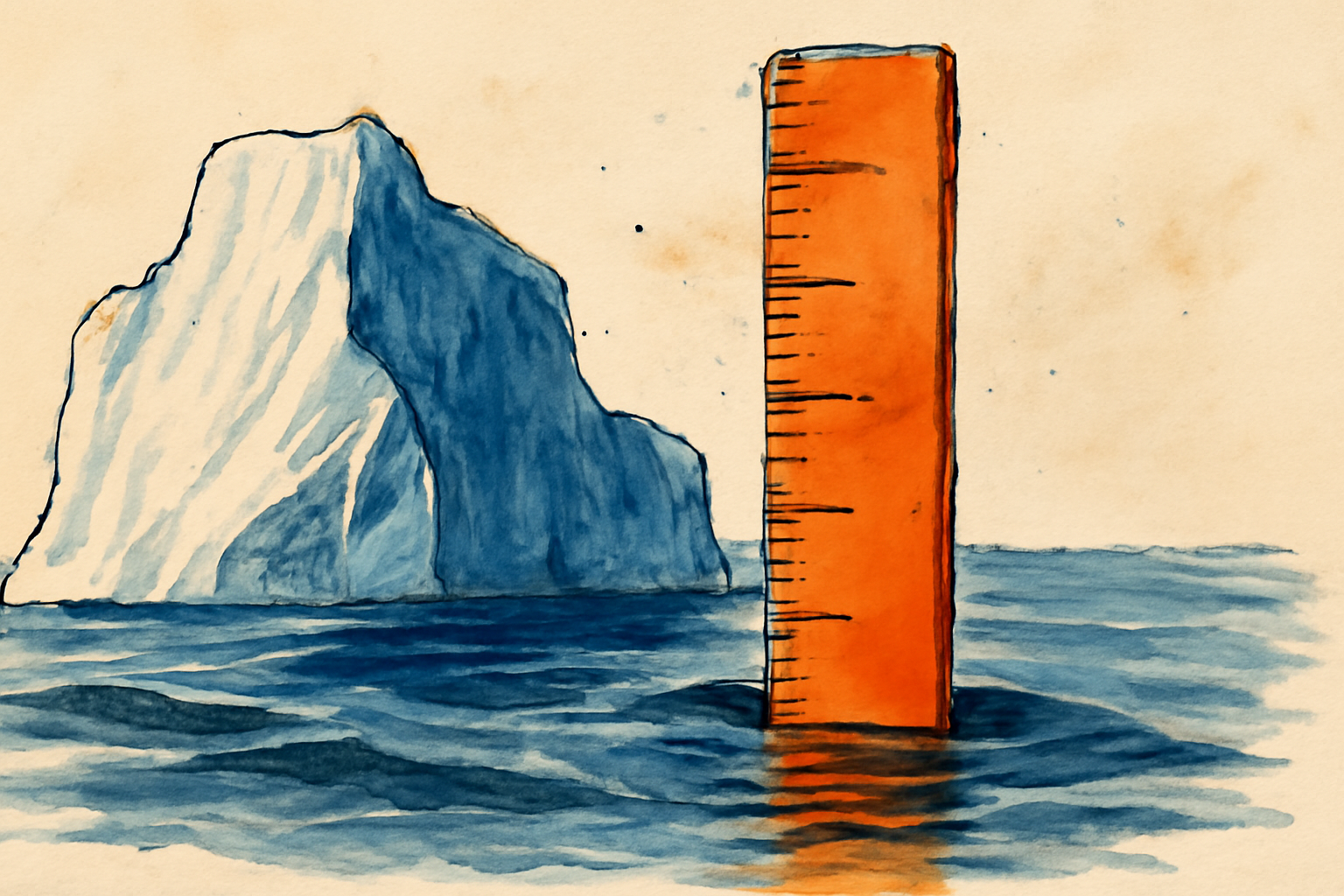
Illustration of seawater reaching beneath an Antarctic glacier across a broad grounding zone above a rocky ridge.
Photo: Kronos News
A new model from researchers at the University of California, Irvine and NASA’s Jet Propulsion Laboratory projects that Thwaites Glacier could add up to 30 millimeters to global sea levels by 2100—about twice previous estimates, according to UC Irvine. [1] The projection holds even without additional climate warming. [1]
The model represents the glacier’s grounding zone—a broad area where the ice meets the seafloor and ocean water can reach beneath it—rather than treating that boundary as a narrow line. [1] The researchers say this approach better matched historical glacier changes when tested against observations, and their simulations estimate a 60 percent probability that the glacier will detach from the Mouginot Ridge by the end of the century. [1]
These are model projections, not a certainty: the ridge estimate depends on simulations that assume a four-to-six-kilometer grounding zone. [1] The report is a university news release; the supplied source does not provide enough detail to independently assess the model’s assumptions or compare its methods with earlier estimates. [1]
Editorial notes
Transparency note
AI assisted drafting. Human edited and reviewed.
- AI assisted
- Yes
- Human review
- Yes
- Last updated
Risk assessment
The central estimate comes from a single university news release describing model simulations; the supplied source does not allow independent evaluation of the paper or its assumptions.
Sources
Related stories
View all

Topics
About the author
Kronos News Desk covers ai energy & climate and editorial analysis for Kronos News.